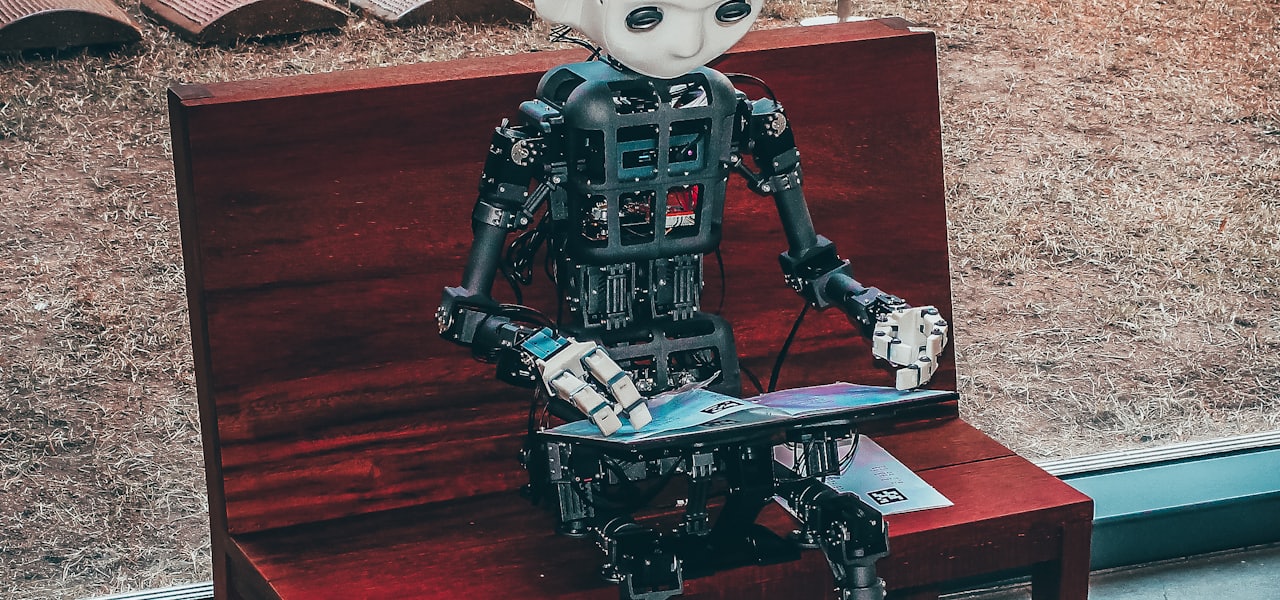
The Stochastic Neural Analog Reinforcement Calculator (SNARC) is a neural network machine designed by Marvin Minsky. Prompted by a letter from Minsky, George Armitage Miller gathered the funding (a few thousand dollars) for the project from the Office of Naval Research of the U.S. Department of Defense in the summer of 1951 with the work to be carried out by Minsky, who was then a graduate student in mathematics at Princeton University. At the time, a physics graduate student at Princeton, Dean S. Edmonds, volunteered that he was good with electronics and therefore Minsky brought him onto the project. During undergraduate years, Minsky was inspired by the 1943 Warren McCulloch and Walter Pitts paper on artificial neurons, and decided to build such a machine. The learning was Skinnerian reinforcement learning, and Minsky talked with Skinner extensively during the development of the machine. They tested the machine on a copy of Shannon's maze, and found that it could learn to solve the maze. Unlike Shannon's maze, this machine did not control a physical robot, but simulated rats running in a maze. The simulation is displayed as an "arrangement of lights", and the circuit was reinforced each time the simulated rat reached the goal. The machine surprised its creators. "The rats actually interacted with one another. If one of them found a good path, the others would tend to follow it." The machine itself is a randomly connected network of approximately 40 Hebb synapses. These synapses each have a memory that holds the probability that signal comes in one input and another signal will come out of the output. There is a probability knob that goes from 0 to 1 that shows this probability of the signals propagating. If the probability signal gets through, a capacitor remembers this function and engages an electromagnetic clutch. At this point, the operator will press a button to give a reward to the machine. This activates a motor on a surplus Minneapolis-Honeywell C-1 gyroscopic autopilot from a B-24 bomber. The motor turns a chain that goes to all 40 synapse machines, checking if the clutch is engaged or not. As the capacitor can only "remember" for a certain amount of time, the chain only catches the most recent updates of the probabilities. Each neuron contained 6 vacuum tubes and a motor. The entire machine is "the size of a grand piano" and contained 300 vacuum tubes. The tubes failed regularly, but the machine would still work despite failures. This machine is considered one of the first pioneering attempts at the field of artificial intelligence. Minsky went on to be a founding member of MIT's Project MAC, which split to become the MIT Laboratory for Computer Science and the MIT Artificial Intelligence Lab, and is now the MIT Computer Science and Artificial Intelligence Laboratory. In 1985 Minsky became a founding member of the MIT Media Laboratory. According to Minsky, he loaned the machine to students in Dartmouth, and subsequently lost, except for a single neuron. A photo of Minsky's last neuron can be seen here. The photo shows 6 vacuum tubes, one of which is a Sylvania JAN-CHS-6H6GT/G/VT-90A.
Peanut App
Peanut, a product of Peanut App Ltd. is an online community for women who are planning to become pregnant, women who are pregnant, women who have had children, and women who are experiencing menopause. Profiles of potential friends are displayed to users who can swipe up to show intent to connect. Users can also connect via discussion threads, groups, and live audio conversations. The app allows users to select their stage of life (trying to conceive, pregnancy, motherhood, or menopause), so as to meet women at a similar life stage, and to discover relevant content. Peanut was founded by Michelle Kennedy shortly after she left Bumble, a female-first dating app. She has described Peanut as, "the app she wishes she had when she first became a mother". == History == Peanut was initially launched in 2017 for mothers and pregnant women. The app focuses on helping users find others with shared interests, such as spoken languages, occupations, and hobbies. It also displays a woman's life stage, such as the age of her children, or the stage of pregnancy. In 2018, it launched a community discussion feature that intended to give women an "alternative to other social platforms". In 2019, it started to serve women who are trying to conceive. In April 2021, it integrated live audio, in response to the COVID-19 pandemic, and the restrictions around in-person socializing. in September 2021, it started to include women who are navigating perimenopause, menopause, and postmenopausal. Although it had initially catered for younger women navigating into new families, a large number of users had undergone surgically or chemically induced menopause due to medical conditions. In July 2021, Peanut launched an investment micro fund, Peanut StartHER, focused on investing in women-owned businesses, as well as other historically excluded founders. == Operation == The Peanut app is a social network exclusively for women, focusing on topics of pregnancy, motherhood, fertility, and menopause. It is available on iOS and Android devices. Users must prove their identity, in keeping with the primary function of in-app safety, and then they can create a profile to interact with other users. For pregnant users, the “Bump Buddies” feature helps connect them with other Peanut users who have a similar due date, which aimed to help expecting mothers combat loneliness during the COVID-19 pandemic. Peanut users also have the option to join “Groups” ‒ sub-sections of users focused on specific topics, including (but not limited to) location, life stage, pregnancy due date, and interests or hobbies. The live voice chat feature “Pods”, enables Peanut users to socialize without the pressure of photos or video chat. It offers features such as a muted audience of listeners who need to virtually raise their hand to speak, emoji reactions, and hosts who can moderate the conversations and invite people to speak.
Noémie Elhadad
Noémie Elhadad is an American data scientist who is an associate professor of biomedical informatics at the Columbia University Vagelos College of Physicians and Surgeons. As of 2022, she serves as the chair of the Department of Biomedical Informatics. Her research considers machine learning in bioinformatics, natural language processing and medicine. == Early life and education == Elhadad studied computer software engineering at École nationale supérieure d'électronique, informatique, télécommunications, mathématique et mécanique de Bordeaux (ENSEIRB). She completed her doctoral research at Columbia University. She was based in the Department of Computer Science, where she developed patient-focused text summaries of clinical literature. == Research and career == Elhadad joined the faculty at the City College of New York. In 2007 she joined the Department of Biomedical Informatics at Columbia University. She was made Chair of the Health Analytics Center at the Columbia Data Science Institute in 2013. Her research considers how clinical data, electronic health records and patient-generated data can enhance access to information for researchers, patients and physicians. She developed an artificial intelligence tool that supported patients in the NewYork-Presbyterian Hospital. Elhadad is interested in using data to advance women's health. She led the Citizen Endo Project that looks to comprehensively describe how patients experience endometriosis. It was built using principles of citizen science, using patient testimonials from focus groups in New York City and data aggregation. She created the app, Phendo, which asks patients about their experience of the disease. The name Phendo is a portmanteau of phenotyping endometriosis. Elhadad was announced as chair of the Department of Biomedical Informatics in December 2022. == Selected publications == Caruana, Rich; Lou, Yin; Gehrke, Johannes; Koch, Paul; Sturm, Marc; Elhadad, Noemie (August 10, 2015). "Intelligible Models for HealthCare". Proceedings of the 21th ACM SIGKDD International Conference on Knowledge Discovery and Data Mining. New York, NY, USA: ACM. pp. 1721–1730. doi:10.1145/2783258.2788613. ISBN 9781450336642. S2CID 14190268. Chaitanya Shivade; Preethi Raghavan; Eric Fosler-Lussier; Peter J Embi; Noemie Elhadad; Stephen B Johnson; Albert M Lai (November 7, 2013). "A review of approaches to identifying patient phenotype cohorts using electronic health records". Journal of the American Medical Informatics Association. 21 (2): 221–230. doi:10.1136/AMIAJNL-2013-001935. ISSN 1067-5027. PMC 3932460. PMID 24201027. Wikidata Q37598951. Shivade, Chaitanya; Raghavan, Preethi; Fosler-Lussier, Eric; Embi, Peter J; Elhadad, Noemie; Johnson, Stephen B; Lai, Albert M (March 2014). "A review of approaches to identifying patient phenotype cohorts using electronic health records". Journal of the American Medical Informatics Association. 21 (2): 221–230. doi:10.1136/amiajnl-2013-001935. ISSN 1067-5027. PMC 3932460. PMID 24201027. == Personal life == Elhadad suffers from endometriosis.
Eurotra
Eurotra was a machine translation project established and funded by the European Commission from 1978 until 1992. == History == In 1976, the European Commission started using the commercially developed machine translation system SYSTRAN with a plan to make it work for further languages than originally developed for (Russian-English and English-French), which however turned out to be difficult. This and the potential in existing systems within European research center, led to the decision in 1978 to start the project Eurotra, first through a preparatory Eurotra Coordination Group. Four years later, the European Commission and coordination group gained the approval of the European Parliament. The goal of the project as to create machine translation system for the official languages of the European Community, which at the time were Danish, Dutch, German, English, French, Italian, later including Greek, Spanish and Portuguese. However, as time passed, expectations became tempered; "Fully Automatic High Quality Translation" was not a reasonably attainable goal. The true character of Eurotra was eventually acknowledged to be in fact pre-competitive research rather than prototype development. The project was motivated by one of the founding principles of the EU: that all citizens had the right to read any and all proceedings of the Commission in their own language. As more countries joined, this produced a combinatorial explosion in the number of language pairs involved, and the need to translate every paper, speech and even set of meeting minutes produced by the EU into the other eight languages meant that translation rapidly became the overwhelming component in the administrative budget. To solve this problem Eurotra was devised. The project was unusual in that rather than consisting of a single research team, it had member groups distributed around the member countries, organised along language rather than national lines (for example, groups in Leuven and Utrecht worked closely together), and the secretariat was based at the European Commission in Luxembourg. The actual design of the project was unusual as MT projects go. Older systems, such as SYSTRAN, were heavily dictionary-based, with minor support for rearranging word order. More recent systems have often worked on a probabilistic approach, based on parallel corpora. Eurotra addressed the constituent structure of the text to be translated, going through first a syntactic parse followed by a second parse to produce a dependency structure followed by a final parse with a third grammar to produce what was referred to internally as Intermediate Representation (IR). Since all three modules were implemented as Prolog programs, it would then in principle be possible to put this structure backwards through the corresponding modules for another language to produce a translated text in any of the other languages. However, in practice this was not in fact how language pairs were implemented. The first "live" translation occupied a 4Mb Microvax running Ultrix and C-Prolog for a complete weekend some time in early 1987. The sentence, translated from English into Danish, was "Japan makes computers". The main problem faced by the system was the generation of so-called "Parse Forests" - often a large number of different grammar rules could be applied to any particular phrase, producing hundreds, even thousands of (often identical) parse trees. This used up huge quantities of computer store, slowing the whole process down unnecessarily. While Eurotra never delivered a "working" MT system, the project made a far-reaching long-term impact on the nascent language industries in European member states, in particular among the southern countries of Greece, Italy, Spain, and Portugal. There is at least one commercial MT system (developed by an academic/commercial consortium in Denmark) derived from Eurotra technology.
Machine-readable medium and data
In communications and computing, a machine-readable medium (or computer-readable medium) is a medium capable of storing data in a format easily readable by a digital computer or a sensor. It contrasts with human-readable medium and data. The result is called machine-readable data or computer-readable data, and the data itself can be described as having machine-readability. == Data == Machine-readable data must be structured data. Attempts to create machine-readable data occurred as early as the 1960s. At the same time that seminal developments in machine-reading and natural-language processing were releasing (like Weizenbaum's ELIZA), people were anticipating the success of machine-readable functionality and attempting to create machine-readable documents. One such example was musicologist Nancy B. Reich's creation of a machine-readable catalog of composer William Jay Sydeman's works in 1966. In the United States, the OPEN Government Data Act of 14 January 2019 defines machine-readable data as "data in a format that can be easily processed by a computer without human intervention while ensuring no semantic meaning is lost." The law directs U.S. federal agencies to publish public data in such a manner, ensuring that "any public data asset of the agency is machine-readable". Machine-readable data may be classified into two groups: human-readable data that is marked up so that it can also be read by machines (e.g. microformats, RDFa, HTML), and data file formats intended principally for processing by machines (CSV, RDF, XML, JSON). These formats are only machine readable if the data contained within them is formally structured; exporting a CSV file from a badly structured spreadsheet does not meet the definition. Machine readable is not synonymous with digitally accessible. A digitally accessible document may be online, making it easier for humans to access via computers, but its content is much harder to extract, transform, and process via computer programming logic if it is not machine-readable. Extensible Markup Language (XML) is designed to be both human- and machine-readable, and Extensible Stylesheet Language Transformations (XSLT) is used to improve the presentation of the data for human readability. For example, XSLT can be used to automatically render XML in Portable Document Format (PDF). Machine-readable data can be automatically transformed for human-readability but, generally speaking, the reverse is not true. For purposes of implementation of the Government Performance and Results Act (GPRA) Modernization Act, the Office of Management and Budget (OMB) defines "machine readable format" as follows: "Format in a standard computer language (not English text) that can be read automatically by a web browser or computer system. (e.g.; xml). Traditional word processing documents and portable document format (PDF) files are easily read by humans but typically are difficult for machines to interpret. Other formats such as extensible markup language (XML), (JSON), or spreadsheets with header columns that can be exported as comma separated values (CSV) are machine readable formats. As HTML is a structural markup language, discreetly labeling parts of the document, computers are able to gather document components to assemble tables of contents, outlines, literature search bibliographies, etc. It is possible to make traditional word processing documents and other formats machine readable but the documents must include enhanced structural elements." == Media == Examples of machine-readable media include magnetic media such as magnetic disks, cards, tapes, and drums, punched cards and paper tapes, optical discs, barcodes and magnetic ink characters. Common machine-readable technologies include magnetic recording, processing waveforms, and barcodes. Optical character recognition (OCR) can be used to enable machines to read information available to humans. Any information retrievable by any form of energy can be machine-readable. Examples include: Acoustics Chemical Photochemical Electrical Semiconductor used in volatile RAM microchips Floating-gate transistor used in non-volatile memory cards Radio transmission Magnetic storage Mechanical Tins And Swins Punched card Paper tape Music roll Music box cylinder or disk Grooves (See also: Audio Data) Phonograph cylinder Gramophone record DictaBelt (groove on plastic belt) Capacitance Electronic Disc Optics Optical storage Thermodynamic == Applications == === Documents === === Catalogs === === Dictionaries === === Passports ===
Morphobank
MorphoBank is a web application for collaborative evolutionary research, specifically phylogenetic systematics or cladistics, on the phenotype. Historically, scientists conducting research on phylogenetic systematics have worked individually or in small groups employing traditional single-user software applications such as MacClade, Mesquite and Nexus Data Editor. As the hypotheses under study have grown more complex, large research teams have assembled to tackle the problem of discovering the Tree of Life for the estimated 4-100 million living species(Wilson 2003, pp. 77–80) and the many thousands more extinct species known from fossils. Because the phenotype is fundamentally visual, and as phenotype-based phylogenetic studies have continued to increase in size, it becomes important that observations be backed up by labeled images. Traditional desktop software applications currently in wide use do not provide robust support for team-based research or for image manipulation and storage. MorphoBank is a particularly important tool for the growing scientific field of phenomics. The development of MorphoBank, which began in 2001, has been funded by the National Science Foundation's Directorates for Geosciences, Biological Sciences and Computer and Information Science and Engineering. The significance of the scientific work on MorphoBank has been featured in the New York Times(here and here), among other publications. == Advantages == Teams of scientists studying phylogenetics to build the Tree of Life assemble large spreadsheets of observations about species (referred to as "matrices"). These teams require simultaneous access by each team member to a single and secure copy of the team's data during a scientific research project. This single copy of the data also changes with great frequency during the data collection phase. Images that can be very helpful for documenting homology statements must be displayed, labeled and shared as homology statements develop. This cannot be accomplished elegantly with a desktop software package alone because in a desktop environment each collaborator is working on his own private copy of project data. Changes made by one participant cannot automatically propagate to others, preventing collaborators from seeing each other's data edits until they are manually (and due to the effort involved, often only periodically) merged into a single "true" dataset. In all but the smallest and most disciplined of teams, file version control and the reconciliation of changes made on multiple copies of the data emerge quickly as significant drags on productivity. MorphoBank is an attempt to address these issues by leveraging the ubiquity of the web and modern web-based application techniques, including Ajax, web service layers, and rich web applications to provide a full-featured, net-accessible collaborative workspace for phylogenetic research. In particular, MorphoBank makes it easy to: Share all kinds of data with geographically separated team members, including taxonomy, character and specimen data, media (including images, video and audio), phylogenetic matrices (including data in the widely used NEXUS and TNT format) and other data such as documents and genetic sequences. Label high-resolution images using a web-based image annotation application. Collaboratively edit project data such as phylogenetic matrices using a built-in web-based matrix editor. The editor allows the linking of labeled images to individual cells of a matrix. Manage access to project data. Access ranges from full-access for team members to anonymous read-only access for potential reviewers. Publish completed project data on the web in support of a published paper with a persistent URL. Search The Encyclopedia of Life for taxon exemplar images. Store high resolution CT data Create ontologies for updating and populating matrix cells. These tasks are difficult or impossible in most existing software applications. == History == In 2001 the National Science Foundation (NSF) sponsored a workshop, at the American Museum of Natural History in New York to develop the outlines of a web-based system for a collaborative, media-rich research tool for morphological phylogenetics. An application prototype presented at the workshop was later refined with feedback from the workshop and became MorphoBank version 1.0. A grant from the US National Oceanic and Atmospheric Administration funded further revisions resulting in version 2.0, released in 2005. Current support from the NSF is funding current feature enhancements to MorphoBank. MorphoBank was hosted by Stony Brook University until late October 2021 and received back up support from the American Museum of Natural History. The current version is 3.0. Rationale for the software was described in the journal Cladistics. MorphoBank has also received support from NESCENT and the San Diego Supercomputer Center. Since 2018, MorphoBank has been supported in part by Phoenix Bioinformatics, a non-profit company founded to sustain databases for the basic sciences. A permanent move of MorphoBank from Stony Brook University to Phoenix Bioinformatics was complete in late October 2021. The San Diego Supercomputer Center has previously provided technical and hosting resources to the MorphoBank project. == Usage == MorphoBank hosts the products of peer-reviewed scientific research on phenotypes. An increasing volume of systematics data is "born digital" and MorphoBank is well suited to handle this type of material. On August 24, 2007, 62 active research projects were hosted by MorphoBank, as well as 6 completed (and published) projects. By 2017 over 2000 scientists and their students were registered content builders (users are not required to register and are even more numerous) and has more than 500 publicly available projects with approximately 80,000 images that are the products of scientific research. Over 1,500 active research projects are hosted by MorphoBank. The software has been used to assemble phylogenetic research on such groups as mammals, from bats to whales, bivalve molluscs, arachnids, fossil plants and living and extinct amniotes. It has also been used more broadly in evolutionary and paleontological research to host curated images associated with published research on lacewing insects geckos, raptor birds, dinosaurs, frogs and nematodes. MorphoBank is increasingly used in conjunction with the Paleobiology Database. Example published projects: Project 1097: Blank CE, 2013 Origin and early evolution of photosynthetic eukaryotes in freshwater environments – reinterpreting proterozoic paleobiology and biogeochemical processes in light of trait evolution Project 2520: Carvalho, T. P., R. E. Reis, and J. P. Friel, 2017 A new species of Hoplomyzon (Siluriformes: Aspredinidae) from Maracaibo Basin, Venezuela: osteological description using high-resolution Project 2651: Baron, M. G., Norman, D. B., Barrett, P. M., 2017 A new hypothesis of dinosaur relationships and early dinosaur evolution MorphoBank has been particularly important to the Assembling the Tree of Life initiative sponsored by the National Science Foundation. MorphoBank is well-suited to such projects because of its tools for merging taxonomic, character and matrix-based data, as well as its collaborative features. Highlights of this research include a collaborative matrix on mammal evolution published in Science that included over 4,000 phenomic characters scored for over 80 species, a matrix on extant baleen whales featuring nearly 600 images, and more.
A Comprehensive Grammar of the English Language
A Comprehensive Grammar of the English Language is a descriptive grammar of English written by Randolph Quirk, Sidney Greenbaum, Geoffrey Leech, and Jan Svartvik. It was first published by Longman in 1985. In 1991, it was called "The greatest of contemporary grammars, because it is the most thorough and detailed we have," and "It is a grammar that transcends national boundaries." The book relies on elicitation experiments as well as three corpora: a corpus from the Survey of English Usage, the Lancaster-Oslo-Bergen Corpus (UK English), and the Brown Corpus (US English). == Reviews == In 1988, Rodney Huddleston published a very critical review. He wrote:[T]here are some respects in which it is seriously flawed and disappointing. A number of quite basic categories and concepts do not seem to have been thought through with sufficient care; this results in a remarkable amount of unclarity and inconsistency in the analysis, and in the organization of the grammar. Aarts, F. G. A. M. (April 1988). "A Comprehensive Grammar of the English Language: The great tradition continued". English Studies. 69 (2): 163–173. doi:10.1080/00138388808598565.